


Our 21st century culture has received yoga into its daily routines. There are probably more yoga teachers today than there are students. Me, I start from scratch everyday and invite you to join me.
Today, I ask what is Hatha Yoga?
The direct translation of Yoga is to yoke, to join together. Our practice is to join the Breath, the Attention, and the Body. To understand that the body is a vessel is a Hatha practice. What does that vessel contain? What is kept in this vessel that is the body? Only Life Force energy, known as Prana. And further, that Life Force energy makes the vessel itself. The body is an expression of Prana.
The Sanskrit word hatha holds the meaning of ha and tha. Ha is the sound of the Prana as a "solar" force that channels through and into the body through what is known as pingala. Tha is the Pranic sound of the mental energy that channels through and into the mind through what is known as ida. Ida and Pingala, left and right, are channels of Life Force that run through the body and allow all its operations. The management of these two qualities of Life Force, the vital physical force, and the mental force, that is the aim and focus of Hatha Yoga.
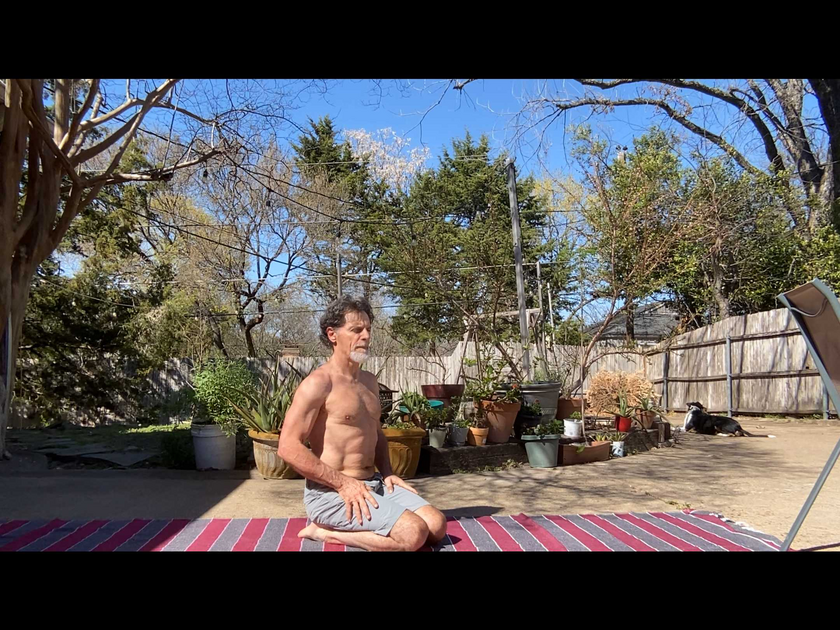
We can observe the body in stillness and in movement. We turn our attention to the breathing and notice the four phases. 1. The exhale empties the vessel. 2. The vessel is empty. 3. The inhale fills the vessel. 4. The vessel is full. Repeat in stilllness. Repeat with movement.
In our practice of stillness and movement, we can ask questions about the breath and how it feels, how it works in the body. Where is the strength through all four phases? Where is the balance? Where do I sense dilation? Contraction? Is right and left equal? How to adjust ourselves so that the breath and the channels right and left find balance and full function? Harmony? The body is an observable entity. The mind is mobile and fluid and can dance like a crazed monkey. So, like Odysseus, we tie our attention to the mast of the body using our breath. Then we can observe the mental energy's thought forms.
Kumar used to say, "Observe your thought-forms." I had no idea what he meant. Yet, as I practice over the years, the body anchors me so that the functions of mind become more clear. Thought-forms arise and blend, fall away, and rise again. With functions of mind, more of our experience finds clarity, in both the world of form and the subtle world of the formless. With a mind we move and work. We socialize in groups, form partners. We find time alone.
Thank you for reading these impromptu notes. I may have opened more questions than I have answered but this Hatha practice is rich and a foundation for other styles and forms.
Here are some questions that come to mind now (which is beyond the scope of this entry) as they relate to the note above:
1) Are there different types of Prana?
2) Are there different styles and disciplines of yoga? What makes them similar and what distinguishes them? What are names of styles and disciplines?
3) As regards Hatha -- What are these channels of Life Force? the nadi? the ida (left) and the pingala (right)?
4) How can we tell if we are balanced?
5) What does the ida do? what does the pingala do?
6) Must we even think of these at all or can we just do the movements? the asanas?
7) where does meditation fit in?
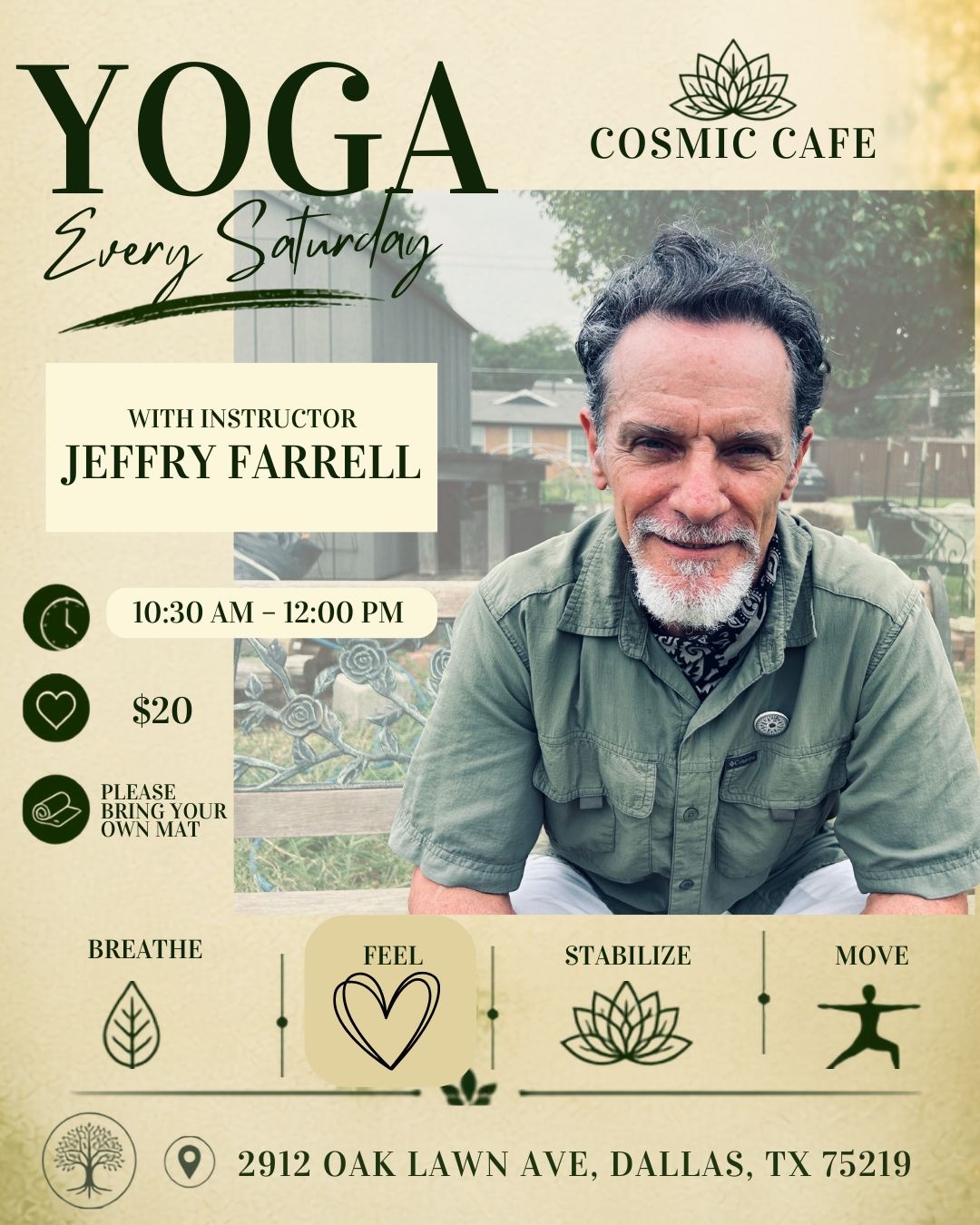
Ok, that's all I can enter today. Let's pause on all those questions. Perhaps the practice itself can answer some of them directly, so come join us at the Cosmic Cafe, 2912 Oak Lawn. Saturdays. 10:30 - noon. $20 cash.
Pls comment . . . .