


yoga with jeff
Lifestyle • Fitness & Health • Books
Based in household yoga practices of more than 40 years, Jeff’s yoga work will include group sessions, and additional content not focused exclusively on posture. That additional content will include 9 Minutes or LESS, and will include THE PRANA PROJECT. Jeff will share therapeutic, maintenance, and training that alternate between the Playful (Lila) and the Heroic (Vira). Look for an occasional Book Review, Interview, Creative Adventure, or Personal Note in realms practical and imaginative.
Interested? Want to learn more about the community?

Learn more first
End of Week 3. Calcaneous Fracture Recovery.

Update: Today marks day 21 since my stunt that broke the heel bone. Today, no crutches. No compression boot.

We take the foot for granted. It slogs along day to day. And parts of the foot? Do we really pay much attention?

To fracture the heel is a practical education. Without the heel proper, the foot is without a "rudder." The entire ankle and foot malfunction. You cannot distribute weight. You cannot propel yourself forward to walk. The subtle micro-movements required of the foot, the micro-movements we learned in the first year of life, come unbound. Right and left unbalance. When asked to bear weight in their normal load, the ligaments, tendons, and fascial lines do not hold. The nerves signal pain to "guard" against further injury. We hobble and limp all gimpy. No bueno.

So, how to heal properly and as quickly as possible?

First, as Kumar would say, "Pain is an honest teacher." The first three days, the foot could bear no weight at all without a variety of pains from foot to just below the knee. I wrapped it. I used the compression boot and crutches. I elevated the foot. I applied hot, salt baths, then ice. I rested on the floor with my legs vertically up the wall.

After three days, I found that the compression boot up to the knee stabilized the leg sufficiently to bear weight. How much weight and how often to press, to step? I listened to pain. That pain was the first guard outpost. That "First Guard" was a sentry through the body, a network of nerve, muscles, and connective tissue. I did not force past this "First Guard." The guard was active through my whole body, even up to my neck and face.

I applied Kumar's principles of Sukshma Vayaam, the practice of "effortless effort." I approached the guard but did not go past it. I became familiar with the guard. I used conscious breath delivery to awaken into that entire network. When that First Guard felt safe, when the First Guard recognized there was support and sufficient strength, it relaxed. It let me pass. I moved with care beyond that First Guard. On alert nonetheless, that First Guard allowed slow and exploratory movement. I moved until pain arose once again. This pain was the signal of the alert First Guard plus the deeper level Second Guard. The Second Guard was a more severe boundary. It signaled potential damage. I did not go further.

I practiced daily acquaintance with the First Guard until, familiar with my slow approach, it felt safe enough to let me pass. Past the First Guard, I moved sloth-like. Slow. I wanted to discover --where did the Second Guard begin? To establish that boundary allowed me to play gently at the edge of healthy, functional movement. To challenge the edge of functional movement is to signal the healing process.

I used my conscious breath delivery -- Pratyahara and Niyasa as "tools." These tools allowed me to perceive the map of my functional movement and to deliver Prana into the channels of Life Force called the Nadi. Pratyahara is to awaken the senses with breath and the capacity to turn them inward. Niyasa is the practice of delivering breath and its Life Force into the subtle channels of life -- from feet to fingers and eyes, all the way through us, a network of connected life.

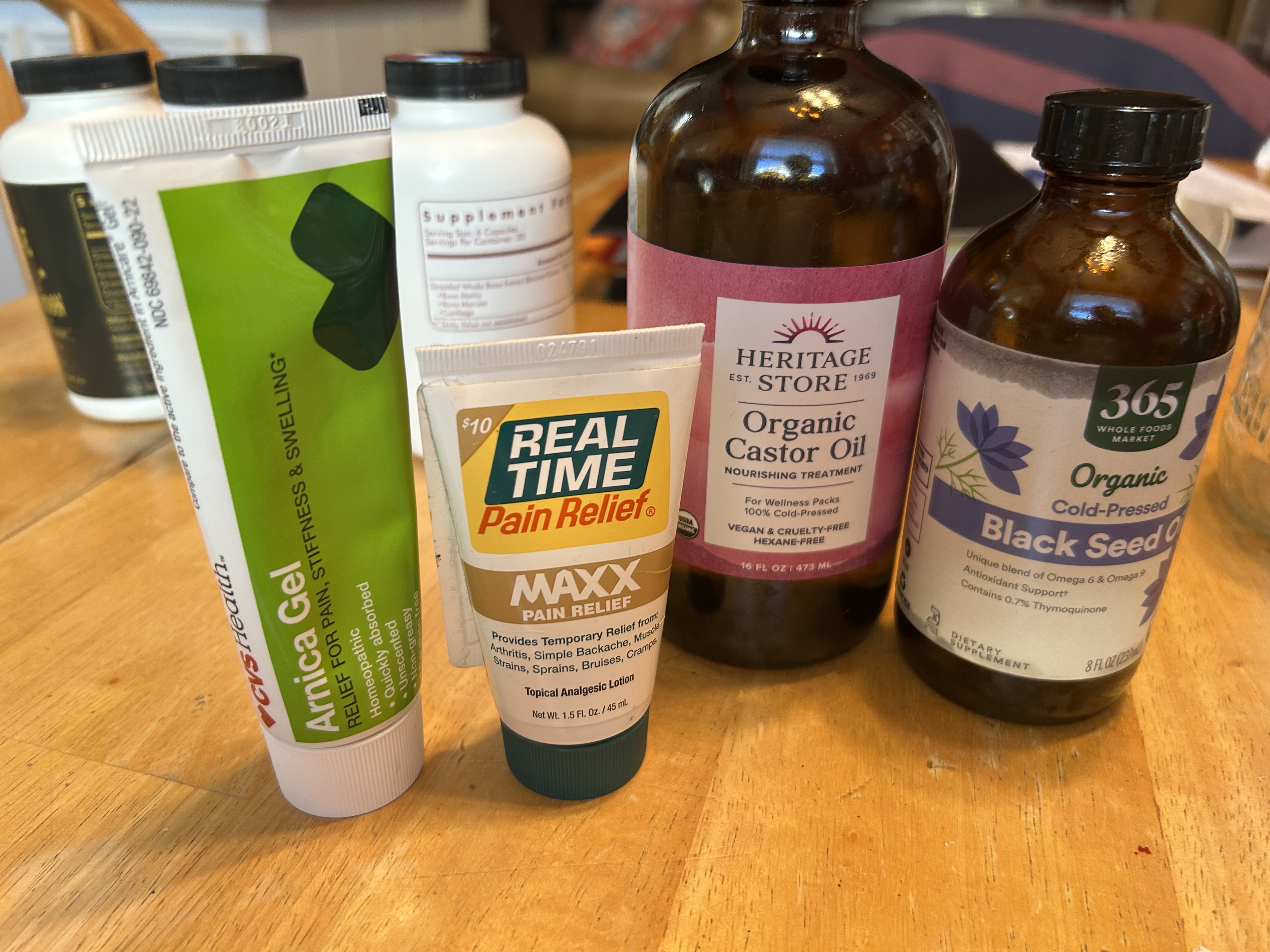
I practiced, then rested. At night I soaked in a HOT salt bath. After, I applied ice. Finally, I applied castor oil and black seed oil, covered it with a sock, then went to sleep for the night on my side with a pillow between knee and shin.

To go through these rituals started out as annoying disruption. But they have grounded me in a very practical and effective routine.

Today marks the end of week three since the fracture. I am going to explore an extended movement practice today. I experiment in movement. I listen to the First Guard to make it feel safe. That allows the whole body to respond and integrate. With that First Guard's "permission" I practice a range of movement, not just for the foot, but for the legs, hips, back, shoulders and neck. All of the movement -- guided by breath inside the range of the Second Guard.

Yesterday, I dropped the compression boot. Today, I use a beautiful hi-tech "corset" for the ankle. I will demonstrate the ankle wrap and the movement. Simple as possible. Principles of Sukshma Vayaam can apply to a variety of conditions, not just a fractured "rudder."

Let’s go. Two videos follow. . . .

Interested? Want to learn more about the community?

Learn more first
What else you may like…
Videos
Posts
Articles
Test for Neuropathy video 1

test to transfer video #1

00:04:39
10 One Minute Moves for Hands, Arms, Shoulders, 1

We begin today from a standing and neutral position. We observe the easy and full breath cycle of exhale and inhale. Place attention on the present moment of the breath cycle as you stand. This is the ground work for the next nine videos.

The videos are progressive so do not skip ahead. This is video #1 of ten, each video about one minute except #10. That final video is a little experiment in observation.

00:01:11
Salute, Wednesday, 7 January 2025

I’ve already made a practice this morning, a practice which you can view in any of the videos over the past two years. If you have the preliminary practices, then you can add on. Here is one Surya Namaskar variation, a Salute to the Sun.

00:21:37
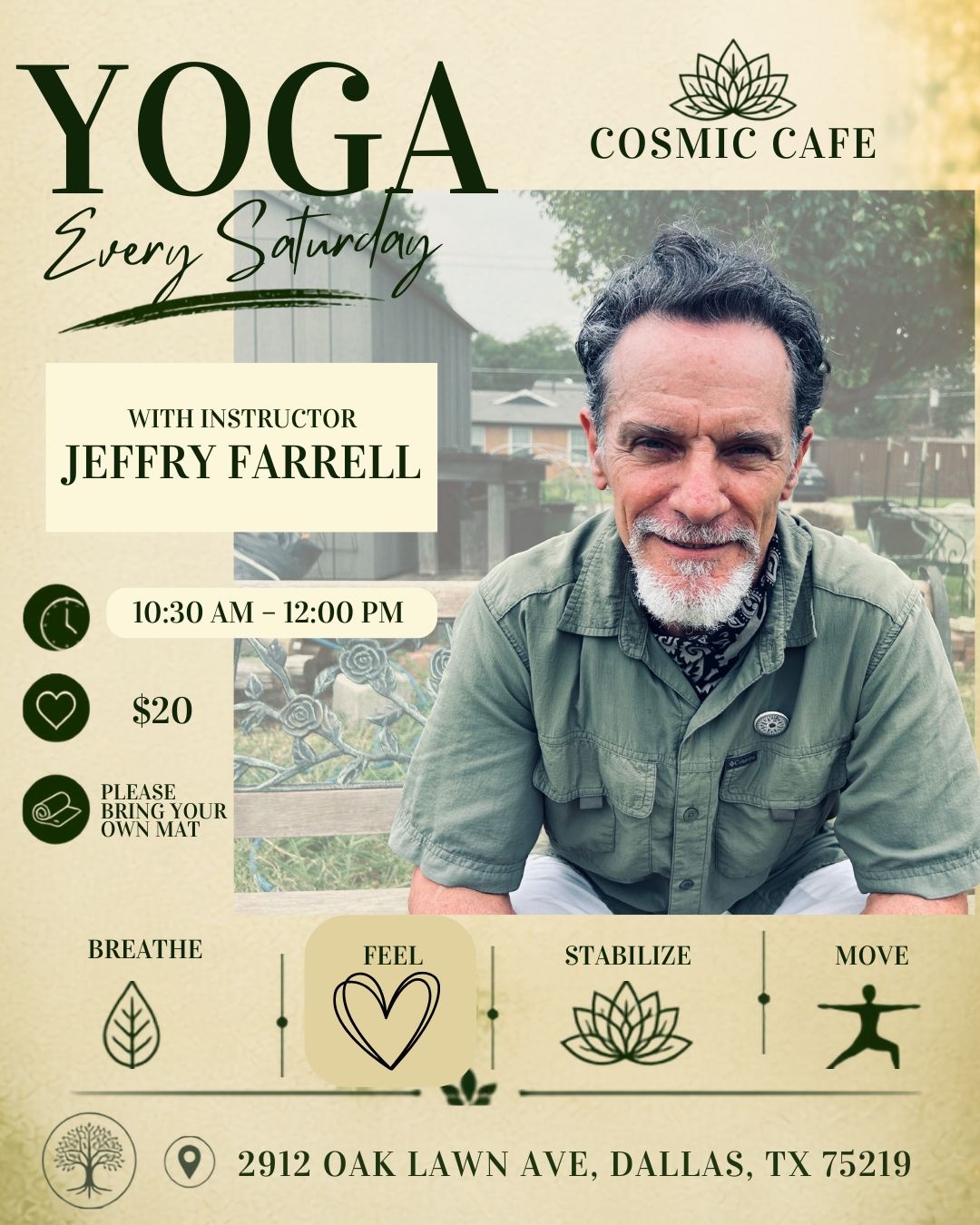
Group class at Cosmic Cafe!

Join Jeff at Cosmic Cafe on Saturday, 10:30 - Noon, for a group yoga class. Space is limited. Bring your mat. Arrive early. $20 (cash preferred). RSVP’s help Jeff and the restaurant prepare. You can comment here or text Jeff to let him know you’re coming.

post photo preview
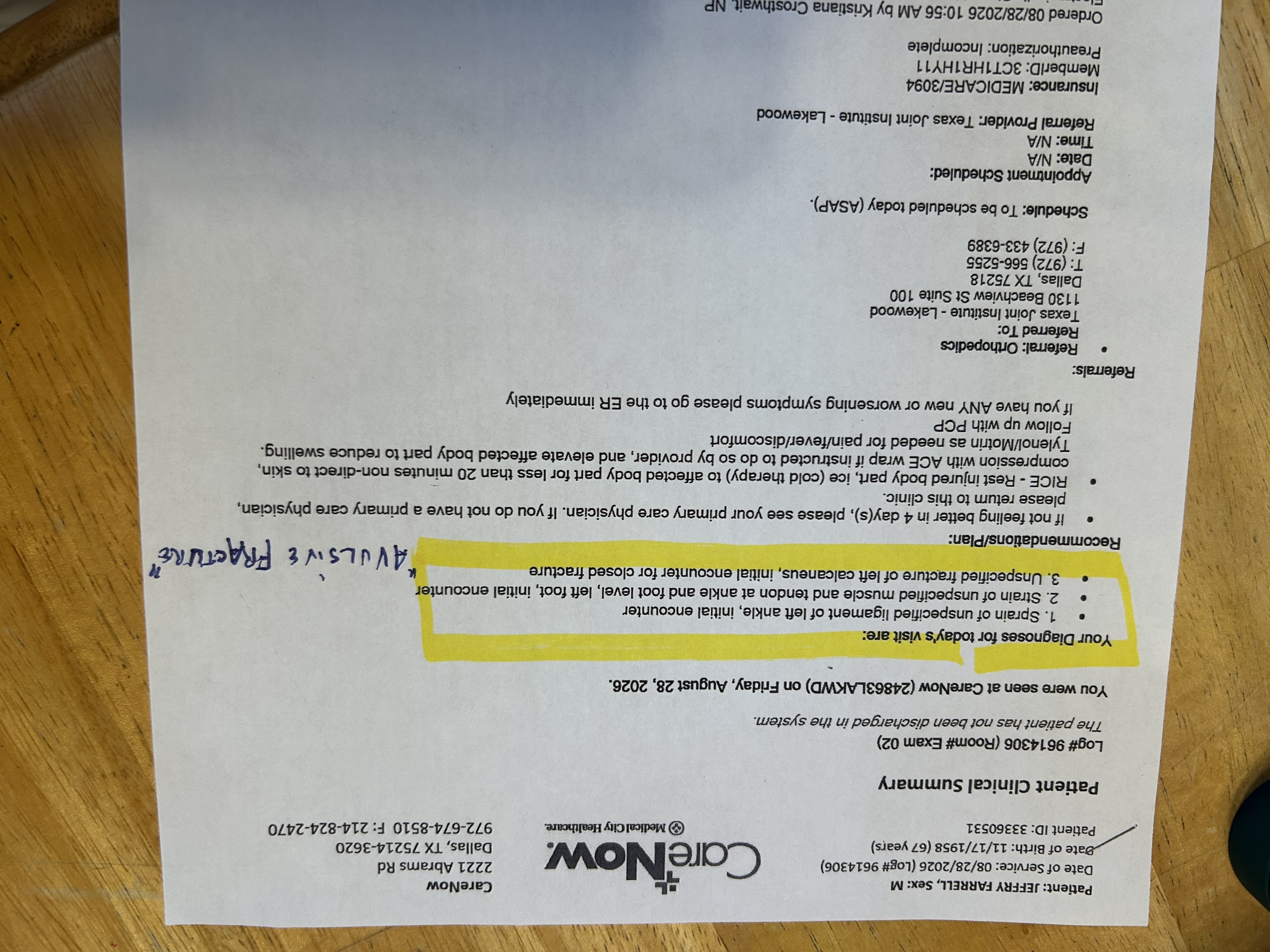
Addressing a Broken Heel

In a rehearsal for an original performance at the Hip Pocket Theatre in Fort Worth, I broke my heel bone called the calcaneous. I had arrived 30 minutes late because a wreck on the highway had stopped traffic. Implicitly, performance requires an extra-daily guidance of energy. That guidance includes re-connecting with basic principles of breath, stillness, and centered movement. However, in my effort to "catch up" I literally leaped into a
"scene" and fell.

You know the feelings that arise from trying to fit into a social or business setting when you arrive late, particularly when timing is significant. Stage timing is significant. Well, you can't ever "catch up" but we can fit in.

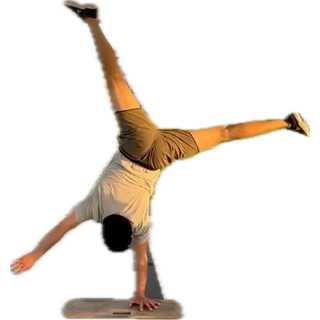
I leaped into a cartwheel which my character was scripted to fall. Because I had not centered, because I skipped the basics, didn't breathe consciously, etc. I fell wrong and slammed my heel on the stage floor. Instant karma. Pain? Oh. Worse was the instant knowledge that the heel hit was not good...

Vertigo:

Here is a simple breath practice I texted to one of my people who has been experiencing vertigo.

Often vertigo is a localized problem of the inner ear but it can be totally unsettling. Not just dizziness but an entire disruption of visual and spatial orientation, a spinning room, an incapacity to focus the eyes, even to the point of nausea and total incapacity.

When the vertigo stops, you can remain dis-oriented and exhausted. The breath practice below is to re-orient and stabilize your “normal” resting position.

First, stop the vertigo. The following three short videos help to stop the vertigo.

1) https://www.google.com/search?q=epley+move+for+vertigo&ie=UTF-8&oe=UTF-8&hl=en-us&client=safari#fpstate=ive&vld=cid:60b6eb88,vid:F_2GpR4HtkY,st:0

2) https://youtu.be/Wez9SZJ7ABs?is=aqlnJGsbOVvssZVV

3) https://www.youtube.com/watch?v=qS-OHrOCa7U?is=qQE1YE1VySeaDDSd

Second, rest. Focus on your breath. Be still. Here is a breath practice to help you be still:

a) Place ...

post photo preview
HATHA YOGA
If you came here from my email invitation, then take ten bucks off your Saturday group class!

Our 21st century culture has received yoga into its daily routines.  There are probably more yoga teachers today than there are students.  Me, I start from scratch everyday and invite you to join me.

Today, I ask what is Hatha Yoga?

The direct translation of Yoga is to yoke, to join together.  Our practice is to join the Breath, the Attention, and the Body.  To understand that the body is a vessel is a Hatha practice.  What does that vessel contain?  What is kept in this vessel that is the body?  Only Life Force energy, known as Prana.  And further, that Life Force energy makes the vessel itself.  The body is an expression of Prana.  

The Sanskrit word hatha holds the meaning of ha and tha.  Ha is the sound of the Prana as a "solar" force that channels through and into the body through what is known as pingala.  Tha is the Pranic sound of the mental energy that channels through and into the mind through what is known as ida.  Ida and Pingala, left and right, are channels of Life Force that run through the body and allow all its operations.  The management of these two qualities of Life Force, the vital physical force, and the mental force, that is the aim and focus of Hatha Yoga.  

We can observe the body in stillness and in movement.  We turn our attention to the breathing and notice the four phases.  1. The exhale empties the vessel.  2. The vessel is empty. 3. The inhale fills the vessel.  4. The vessel is full.  Repeat in stilllness. Repeat with movement.  

In our practice of stillness and movement, we can ask questions about the breath and how it feels, how it works in the body.  Where is the strength through all four phases? Where is the balance? Where do I sense dilation? Contraction?  Is right and left equal?  How to adjust ourselves so that the breath and the channels right and left find balance and full function? Harmony? The body is an observable entity.  The mind is mobile and fluid and can dance like a crazed monkey. So, like Odysseus, we tie our attention to the mast of the body using our breath.   Then we can observe the mental energy's thought forms.  

Kumar used to say, "Observe your thought-forms."  I had no idea what he meant.  Yet, as I practice over the years, the body anchors me so that the functions of mind become more clear.  Thought-forms arise and blend, fall away, and rise again.  With functions of mind, more of our experience finds clarity, in both the world of form and the subtle world of the formless. With a mind we move and work.  We socialize in groups, form partners. We find time alone.

Thank you for reading these impromptu notes.  I may have opened more questions than I have answered but this Hatha practice is rich and a foundation for other styles and forms.

Here are some questions that come to mind now (which is beyond the scope of this entry) as they relate to the note  above:

1) Are there different types of Prana?  

2) Are there different styles and disciplines of yoga?  What makes them similar and what distinguishes them?  What are names of styles and disciplines?  

3) As regards Hatha -- What are these channels of Life Force? the nadi?  the ida (left) and the pingala (right)?

4) How can we tell if we are balanced?  

5) What does the ida do? what does the pingala do?

6) Must we even think of these at all or can we just do the movements? the asanas?

7) where does meditation fit in?


Ok, that's all I can enter today.  Let's pause on all those questions.  Perhaps the practice itself can answer some of them directly, so come join us at the Cosmic Cafe, 2912 Oak Lawn.  Saturdays.  10:30 - noon.  $20 cash.  


Pls comment . . . . 


Read full Article
Here is a Salute to the Sun version whose purpose is to carry Shtira
Surya Namaskar Lila and Vira

It's really a video not an article. . . .  And it is the captured video of one Salute sequence originating with one side.

Read full Article
post photo preview
Elements of Practice
March 11, 2023

Read full Article
Available on mobile and TV devices
google store google store app store app store
google store google store app tv store app tv store amazon store amazon store roku store roku store
Powered by Locals